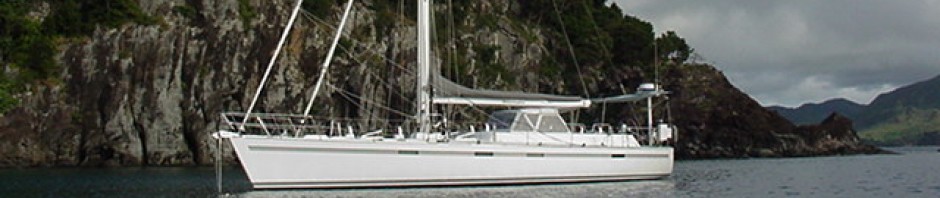
georgebackhus on August 30th, 2010

We’re presently weather bound, anchored on the south end of Isola San Pietro, a small resort island off the southwest corner of Sardinia.  Mistral is the local term for the fresh northwesterly blows that spawn up in the Gulf of Leon and affect the central Mediterranean Sea.  This one, packing winds of up to 40 knots is forecast to be around for the next few days. The Mistral and the resultant rough seas are not something one wants to intentionally sail into.  We’re waiting for the weather to moderate before we sail to Mahon on the Island of Menorca in Spain’s Balearic Island group, about 200 miles West-Northwest of our present position.   

We decided to spend of bit more time on the picturesque and less crowded south end of Sardinia as we make our way westward toward the Strait of Gibralter this season.  Among other things we wanted to do one last stock-up on all the Italian goodies (cheese, wine, olives, seasonings, specialties, etc.) that we came to enjoy during our travels in Italy last season. 

Our passage from Favignana in the Egadi Islands was a mixed bag.  We were wide awake at 0230 hours due to the rolling caused by an easterly swell coming through the anchorage.  We decided that since we weren’t going to get any sleep anyway, we might as well be covering some miles.  We weighed anchor and set sail for Sardinia at 0300 in calm wind and seas and light fog, dodging some tuna nets marked with tiny white strobe lights.  

A few hours after sunrise, a nice 10-15 knot northerly breeze filled in and we were able to set the jib, cut the engine and sail at a reasonable speed of 6-7 knots.  We were visited later in the morning by a pod of small but playful dolphins that played in our bow wake, danced on their tails and did some spinning leaps. 

Dolphins playing in Moonshadow’s bow wave


Mid-air shots like this are difficult to catch-good job Merima! 

The breezed gradually died and by late afternoon we were motor-sailing once again.  A few hours later, as we approached the south east corner of Sardini the breeze filled in again, but this time from the south west at 15 to 20 knots.  The good news is that we could sail once again.  The bad news is that this breeze would make our intended anchorage off the town of Villasimius on the west side of Capo Carbonara untenable. 

Fortunately there was another option for us on the east side of Capo Carbonara, a shallow bay called Porto Giunco.  We never like to make landfall in a strange place at night, but just after sunset, we could see a couple of megayachts and a few other cruising boats safely tucked in there.  The approach was straight forward with the off-lying hazards lit and/or charted and we were safely anchored by about 2200 hours with good protection from the sea swell. 

The southwesterly had moderated and hoping to anchor in the beautiful sand-bottom bay off Villasimius that we enjoyed last season, we took a jaunt around Capo Carbonara.  The swell had persisted so we returned to the less crowded anchorage just south of Porto Giunco.  The chart showed no off-lying hazards, but as we approached an open spot in the small bay, I could clearly see a shallow patch.  We quickly headed up and anchored well clear of what appeared to be a rocky pinnacle just below the surface.  

After a relaxing lunch we saw an Italian yacht heading into the anchorage, sun in their faces, on a collision course with the pinnacle.  I whistled to get their attention and the skipper threw the helm over just in time to narrowly avoid contact.  After they had anchored safely, we noticed the owner/skipper of the yacht swimming towards us, holding a bottle of wine out of the water.  It was a generous gesture of appreciation which we did not expect, but I would not have wanted him to swim all the way back to his yacht holding that lovely bottle of wine out of the water.   He thanked us and told us that the pinnacle did not show on his charts either.  

Late that afternoon, we waved another yacht approaching in poor light away from an impending collision with the pinnacle to a safe spot in the anchorage.  They told us the pinnacle did not appear on their charts.   Assuming that this thing had been whacked by many craft, I decided to go have a look the next morning. 

A northeasterly started to blow, which would make anchorage on the east side of the cape uncomfortable, if not unsafe.  Before we departed the anchorage, I had a morning swim over to the unmarked and uncharted pinnacle.  Lurking a foot or so below the surface, I could actually stand on the top of it.  Surprisingly, I did not find any evidence of contact let alone any remnants of anti-fouling paint from the numerous boats that we could only assume had discovered this pinnacle by surprise.   We made a note of it on our electronic chart as well as numerous other uncharted rocks we could see lying just off the shore on the way down to Capo Carbonara. 

George stands on top of the uncharted pinnacle 

Rounding Capo Carbonara, the wind immediately died and the seas were calm, but we headed west to the large open bay off the town of Poetto.  We had planned to go into the marina in Cagliari the following morning so this put us within spitting distance to the entrance of the large port. 

The next morning we tied up at Marina del Sole where we had stayed the previous year.  Marina del Sole is a ragtag old marina that shows its deferred maintenance as much as many of the boats tied up there.  It is a long walk into the center of Cagliari but reasonably close to a few restaurants, chandleries, a grocery store and the bus to town.  


A news stand in the shade of a huge ficus tree, Cagliari 

Enjoying traditional Sardinian fare at Su Cumbidu, Cagliari

Because of their comparatively low rates, Marina del Sole is favored by cruisers as a place to winter over.  They also have a couple of old Fiats that they rent out by the hour and a barbecue social every other Saturday night.  We enjoyed the barbeque (salt fish, chicken and pork skewers and Sardinian sausage) and meeting some other cruisers at the marquis set up on the main pontoon.  We took advantage of the rental car to get to the Auchan supermarket on the other side of town to do a big provisioning.  

After spending two hours at Auchan filling up two large shopping carts with provisions, our Visa cards were declined at the checkout.  Merima went with one of the service ladies down to try to sort it out.  After much conversation and phone calls to the local bank, they informed me the problem was at my end.  I rang my bank in the States, thinking it was another “security hold.”  Nope!  Another few phone calls to the local bank and an hour later it was sorted.  The last challenge was to load all the bags and boxes into carts at the marina and move them along the rickety docks to Moonshadow, which just happened to be the furthest yacht from the parking lot.  Moving carts along a dock that is listing ten degrees and is criss-crossed with dock lines and shore power cords is a cruiser’s version of running the gauntlet, but by late afternoon we had everything safely on board and stowed away. 

Stocked up, cleaned up and slightly hung over from the party, we headed back over to Poetto for what we had hoped would be a quiet night.  For some reason, Sunday is a big night in Poetto and the discos along the beach were pumping out “doof-doof” music till almost sunrise. 

With another fresh southwesterly in the forecast, we headed across the Gulf of Cagliari to a little bay behind the Capo de Pula. Protection was good in the picturesque little bay at Pula and we could see the ruins of the ancient city of Nora along the nearby shore.  The breeze piped up to 20+ knots late in the afternoon so we enjoyed our happy hour watching arriving yachts with varying degrees of skill levels try to anchor in the thick weed bottom with varying degrees of success.  The breeze calmed in the evening and we enjoyed the beautiful scene of a full moon rising from the sea near the flood-lit nuraghi perched on Capo di Pula.  This nuraghi is one of about 7000 similar defense towers dating back nearly 4000 years, scattered around the Sardinian countryside.

Moonrise and the nuraghi at Capo di Pula 

After a couple days, we headed further south, returning to Porto Malfitano, the place where we had jumped off to sail to Tunisia the previous year. We had a pleasant few days there enjoying some swimming and snorkeling in the gin-clear waters.  I even tried some spear fishing along the rocky shoreline.  What was I thinking-there are no fish in the Med!

This lighthouse overlooking Porto Malfitano is also a posh boutique hotel

We headed west again to Porto Ponte Romano where we ran into our old cruising friends Kerstin and Hans from Cinderella.  We spent the afternoon taking a walk around the nearby town of Sant’ Antioco and joined the Cinderellas for drinks and dinner in town that evening.


A piazza along the Corso, or main street in Sant’ Antioco 


A lovely homestead in the shadow of a nuraghi at Capo Sperone on the south end of Isola Sant’ Antioco

The next day brought light breezes so we decided to motor around the island of Sant’ Antioco to the resort island of San Pietro.  We anchored outside the breakwater off the main port town of Carloforte.  Although Carloforte is a relatively modern town, it is quite attractive with its many pastel colored buildings.  Most of the town was enjoying the typical afternoon siesta, so with the exception of the area near the ferry terminal, the town was very quiet.  We did find one good supermarket that opened late in the afternoon, giving us the opportunity to pick up a few fresh provisions.


The streets of Carloforte are very quiet on a Friday afternoon. . .

Everyone is taking a siesta 


Exploring the back streets (and stairs) of Carloforte

The grib (meteorological data) files we downloaded showed that a Mistral was heading our way.  The next morning we headed south a few miles to the south end of the island where a couple of small bays would afford us with some better protection from the northwest and we could wait out the upcoming blow.


georgebackhus on August 23rd, 2010

The Southern coast of Sicily is an easy day sail from Malta.  The trick is to find a weather window that provides the necessary breeze to get you there, but allow you be comfortable when you arrive as there are few protected anchorages between Syracusa on the east coast and Trapani on the west coast. 

An 0630 hours start would give us plenty of time to make landfall by sunset.  We had almost no breeze until a sea breeze filled in that afternoon, allowing us to sail the last twenty or so miles to the port of Licata, which is situated roughly in the middle of the southern coastline of Sicily. 

Licata is a rather non-descript fishing town with not much to offer cruisers excepting a designated anchorage inside the long outer breakwater.  Seas were calm and we decided to anchor out near the confluence of the Salso River to avoid the noise and wash of the fishing boats coming and going at all hours of the night. 

We left early the next morning heading west.  The 9-15 knot land breeze faded away after an hour leaving us to motor sail the rest of the 25 miles to Porto Empedocle.  Empedocle had a bit more character and once again, a designated anchorage inside the breakwater with room for a few visiting yachts and offering excellent all-around protection.

The anchorage inside the breakwater at Porto Empedocle 

Merima went into town to top up our prepaid Italian cell phone SIM cards (one for voice, one for wireless modem).  She reported that typical of the smaller southern towns, everyone was very friendly and helpful.   It actually took her two trips to town to sort out our telephony.  

TIM (Telecom Italia Mobile) is quite a clever company.  Even though our SIM cards are “prepay,” we somehow managed to accrue a debit balance on both numbers.  This is not apparent until after you have recharged your number and nobody at customer service can explain exactly how this happens.  Anyway TIM managed to extract another €25 from us before we could get reconnected.  All one can say is T.I.I. (this is Italy!)

You won’t find many tourists in quiet little Sicilian towns like Porto Empedocle 

If the protection was good at Porto Empedocle, the price we had to pay was a layer of soot on the decks the next morning thanks to a factory of some sort belching out smoke a few hundred meters upwind of the anchorage. 

We motor-sailed west about 50 miles along a lovely stretch of coastline to the fishing port of Mazara del Vallo.  The long mole provided plenty of protection in its lee.  The port itself was chock full of trawlers and that night (a Wednesday) the town had some sort of bash with a live concert and fireworks that went on till the early hours.  

The next morning we had an easy hop up to the town of Marsala and anchored in the lee of the long mole called Diga Foranea in a light westerly.  We splashed the dinghy and went into town for an espresso and to pick up some provisions.  Marsala’s Via Roma or main street had some lovely shops and we found an excellent supermarket.  Apparently we blended in well, as people in the market kept chatting with us (at least trying in my case) as if we were locals.  We snagged some local cheeses and a few bottles of fine Marsala wine for which the town is famous.

The statue in the fountain in the center of town seems to say “get drunk off your ass in Marsala.” 

The wind backed around to the south the next morning.  Within hours, our anchorage would have become untenable so we headed out, turned north and set sail for the Isole Egadi (Egadi Islands). 

Wine warehouses on Capo Lilibeo near the town of Marsala 

The five islands that form the Isole Egadi are contained within a marine reserve.  The locals still fish for tuna although their numbers have been seriously depleted.  If the volume is down, they make up for it with price.  Some tourist shops in Favignana sell locally harvested tuna for more than €20 for an average sized tin.  John West (about €1 a tin) is fine for us, thanks.

Shops in Favignana sell tuna at caviar prices 

There is little protection from a southerly in this area, so when we pulled into the bight just west of Punta Marsala on the island of Favignana, we were in the company of at least a hundred other craft swinging on their hooks and enjoying a fine summer day.  Many left the anchorage before sunset, presumably heading to a marina somewhere.   

Italian power boaters seem to take it as a personal challenge to see of they can reach top speed between the place where they’ve lifted their anchor and the edge of the anchored boats, throwing up huge wakes that send the rest of us rolling on our beam ends.  If anyone has ever wondered why some sailors don’t like power boaters, they need only spend an afternoon in a crowded anchorage in Italy. 

We shifted the next day to a less crowded anchorage just outside the port of Favignana and went in to town for a stroll.  Favignana was once a busy fishing port and the center of the tuna canning industry.  The disused canneries remain at the foot Montagna Grossa which is crowned with an Aragonese fortress.   The port, however, is chock full of visiting yachts, ferries, tour and tripper boats.


The port at Favignana

We visited Favignana on the 15th of August, which in Italy is known as Ferragosto. 

It literally translates to “Iron August,” but it means the feast of Assumption day.  It is usually one of the hottest days of summer and falls in the middle of the typical Italian summer holiday.  The town was crawling with Italian holidaymakers.  The streets were crowded, the outdoor cafes full and there was a dozen cars queuing at the town’s lone gasoline pump.  Nonetheless the town was quite pleasant and would be a delightful place to visit in any month but August.

Ferragosto in Favignana


Old town hall, Favignana


A quiet back-street home, Favignana


An offering for the Assumption, Favignana 

Around midnight that night a swell started working its way into the anchorage from the east and the rolling became progressively worse.  We decided that since we weren’t going to get any sleep, we might as well be heading someplace, so at 0300 hours in hazy stillness, we set sail for the island of Sardinia, 150 miles to the northwest.


georgebackhus on August 12th, 2010

After our excellent haul out, we spent the next three weeks waiting for the new dodger cover to be completed.  Somehow we managed to find a plethora of jobs and projects to fill up most of our days.    Our “to do” and “to get” lists are the shortest they’ve been in years, both hovering in low single digits.  We still haven’t managed to fly the “no wrench” flag (signifies that we didn’t do any boat work and there was nothing to be repaired) in years. 

When our anchor was acid washed in preparation for re-galvanizing, some rather concerning stress cracks were exposed.  Better we discovered this in the yard than when anchored on a lee shore in a blow, I suppose.  The 50 kg (110 pound) Bruce that had served Moonshadow so well (except on weed bottoms) for 25 years and 100,000 miles of cruising, had finally reached the end of its useful life.  We gifted it to Daniel, who made our dodger cover, and it has apparently become a piece of nautical memorabilia in the back yard of his home. 

The stress of 25 years of cruising forced the retirement of our Bruce anchor 

Our new anchor is 55 kg (121 lb) New Zealand made Rocna which is the largest we could carry without extensive re-fabrication of Moonshadow’s stem fitting and bow roller.  While it looks almost embarrassingly large on the bow, it lives up to its reputation of setting fast and well, even in weed bottoms.  With weed bottoms becoming more and more common, we reckon we’ll sleep better during our last season in the Med. 

The Rocna passed the weed test

Upon inspection of the EPIRB (Emergency Position Indicating Radio Beacon), which is a must-have item for offshore work, I discovered the battery was two years out of date.  I contacted the manufacturer’s local agent in Malta who told me that he could source the battery from England in a few days.  The bad news was that because the battery contained hazardous materials, shipping costs would be three times as much as the battery.  For an additional €80 we purchased a new EPIRB with an integrated GPS.  The GPS option transmits our location within a few meters should we have to deploy it.  It just so happens that this piece of equipment is required for the ARC Rally.  Furthermore, the batteries are made of non-hazardous materials  and are user-changeable. 

Our six week stay in Malta was certainly not all work and no play for us.  We became acquainted with and socialized with some friendly local yachties who were frequently on board their yachts on our pontoon.  We found a number of good restaurants in the neighborhood and enjoyed some excellent meals out while sampling an array of excellent and reasonably priced Maltese wines.  Our favorite is a Girgentina Frizzante, a dry white with a slight bit of fizz.   Rosé wine is popular in Malta as it goes down well on a warm afternoon or evening.  One convivial little café/pub close to the marina called the Jubilee became our “local” when we wanted a pint of Guinness or glass of wine after the evening stroll.  In addition to great music and atmosphere, they also serve a superb plate of Maltese-style cheese ravioli with a sage butter sauce. 

When it wasn’t too hot, we enjoyed some bike rides along the long promenade that winds along the shoreline of Msida, Ta’Xibex, Sliema and St. Julians.  While Malta has no shortage of sunshine, sun worshippers will find it difficult to find a nice patch of sand on which to lay their towel.  Most of the shoreline is rocky.


The “beach” at Sliema

For the cruising sailor, Malta has plenty to offer.  It is an excellent place to winter over as marina prices are amongst the lowest in the Med-if you can find space.  Almost anything to do with boats can be found at a reasonable price.  If you pay in cash or are a foreign flagged yacht and plan to depart the EU, you can usually avoid the nasty 18% V.A.T. (value added tax).  Services are available for almost any type of work, most people speak English and the labor rate is significantly less than on the European side of the Med.  Provisioning is excellent for almost any type of food.  We even found good New Zealand lamb at prices comparable to those back home.  Some of the vendors even come to you.  Fruit and veggie trucks regularly appeared in the marina and made stops in the surrounding neighborhoods.  Proximity to the popular cruising grounds of Croatia, Greece, Italy, Spain and Tunisia is good as are connections by air and ferry to the rest of Europe.


Fruit and veggie trucks visit marinas and neighborhoods

There is plenty to see and do in Malta.  Public transportation (bus and ferry) is cheap and efficient and will take you almost anywhere.  Most of the amenities we needed were within a short walk from the marina.  The architecture in the nicer and historic areas is pleasant and interesting.  One neighborhood or another seems to always have some sort of fiesta on to celebrate the birthday of their patron saint.  Malta appears to have a good standard living. We saw no evidence of poverty or homelessness and understand that the crime rate is relatively low.  There is plenty of new construction taking place as a result of the tourism boom and ex-pats from northern Europe choosing to retire in Malta owing to the pleasant climate and reasonable cost of living. We found that the people were especially warm, friendly and helpful.    

A beautiful Art Deco apartment block in Sliema


Festival regalia, Valetta

Tourism is winning over the old fishing port of St. Julian’s

For us, Malta has only two negatives. Firstly there are few protected all-weather anchorages around the islands, making a mooring or marina berth almost essential for a long stay.  The other was the annoyingly loud and frequent fireworks displays that went from 0800 hours to midnight almost daily.  Rarely an hour went by when we did not hear a rumble resembling cannon fire, much of it very close to us and deafeningly loud.  On a few occasions it would carry on nearly non-stop for half an hour.  On one occasion we heard a visiting Italian shouting obscenities (which Merima translated, but I cannot print) into the air out of frustration. 

Our new dodger cover finally arrived two weeks late, but in the end we were pleased with the result. 

Having a bbq after the new dodger was installed 

We tossed off the lines from Manoel Island Marina the following day and headed north a few miles to the large resort-lined bay by the town of Millieha  and spent a couple of pleasant days on our new hook, checking out all our systems and waiting for favorable winds for the sail north to Sicily. 

The picturesque town of Millieha overlooks the resort-lined bay


The nautical version of the Smart Car zipping around Millieha Bay 


georgebackhus on July 22nd, 2010

With the prevailing northwesterlies forecast to continue for a few days and Moonshadow back in sailing trim, we planned to set sail for Malta on 23 June.  The last job prior to departure was to “mow the lawn” or clean the bottom.  Our two-year-old anti-fouling paint had lost most of its “anti” qualities and after sitting stationary for seven months in the nutrient-rich Tunisian waters the bottom was definitely foul.  A bustling ecosystem was flourishing on our bottom and some of the most prolific plants had reached a meter in length.  Not a very good nor fast look. 

With paint scraper in hand, I sucked the air out of two full SCUBA tanks while removing the thick layer of accumulated organisms.  Scraping the soft growth off the bottom was about as close as I have ever come to shearing a sheep.  The tiny sea mites and shrimp living in the artificial reef swam for cover from the disturbance, most of them seeking refuge on or in my wetsuit, causing major itching while they were alive, and a foul odor after they died. Check-out formalities in Monastir were relatively easy as the Customs and Police offices are situated right in the marina.  Since Merima is a New Zealander and had overstayed her visa by two weeks, she had to pay an extra 20 Dinar (US $12) and wait a few hours for the proper paperwork to be processed before we could depart Tunisia.  By 10:00am we had been cleared and were ready to go. 

We tossed off the lines and headed out of the marina in very light air, setting the main and motor sailing.  Within a half hour, a pleasant ten-knot breeze had filled in just forward of the beam so we were able to unfurl the genoa, kill the engine and make some reasonable speed under full sail.  The perfect sailing conditions were a just reward for the previous two weeks of hard and sweaty labor it took to tidy up and recommission Moonshadow.  Our course was set due east, 185 nautical miles to the island of Malta. 

The winds stayed in the mid-teens through the evening, peaking at 25 knots for a while and dropping back to around 10 for some short periods.  Even with a very average bottom we were able to maintain an eight-knot average speed. 

Sailing on the rhumb line, our course took us within sight of the island of Linosa, which was illuminated in moonlight.  Linosa is one of three small islands that form the remote Pelagie Island group, which is part of Italy.  Interestingly the Pelagies are situated more than 80 nm southwest of Sicily, which means they are further south than both Malta and the northernmost tip of the African continent. 

We arrived after sunrise at the first waypoint we had plotted in the middle of the channel formed by Gozo and Comino Islands to the north and Malta to the south.  From there, the approach to Valetta, the main harbor on the east coast of Malta, was straight forward.   

Malta looks distinctly different from Italy to the north and Africa to the south.  Even though the Ottomans were driven out five hundred of years ago, much of their distinctive style architecture remains.  There is little distinction however in the color of the earth-tone or unpainted stone low-rise buildings and the surrounding barren, rocky land.  Much remains of the early fortification that has resulted from Malta’s tumultuous history. 

We entered Marsamxett Harbour, leaving Fort St. Elmo on the seaward end of Valletta to port and Fort Tigne on the promontory off the suburb of Sliema to starboard.  Heading into Lazaretto Creek on the west side of Manoel Island we headed for a berth in the Manoel Island Yacht Harbour where we were assisted by two friendly dock attendants in tying up to a crumbling old bulkhead between two mega yachts. The trip took us just 24 hours dock to dock and we had Moonshadow tidied up by happy hour, where we celebrated a quick and uneventful maiden voyage of the 2010 the cruising season.


The view of Valetta as we entered Marsamxett Harbour

Manoel Island is attached to the mainland by a short bridge.  To the left is the working class suburb of Gzira and to the right to the fashionable suburb of Sliema, with its long waterfront promenade lined with tourist hotels, shops, bars and cafes.  

Check-in formalities to Malta were facilitated by the friendly and efficient marina manager.  A phone call was made, an official showed up within a few minutes, and after scribbling my signature on a declaration that we had no live animals on board, we were officially checked into Malta.  We weren’t even asked for our passports or ship’s papers.  It doesn’t get much easier than in the European Union. 

Due to its strategic location in the geographical center of the Mediterranean, Malta has long been a center for boat building and repair.  Gzira clearly caters to the boaties.  Wandering just few blocks of the marina, we found at least half a dozen reasonably stocked chandleries.  There was also a full service dive shop where we arranged for our SCUBA tanks to be collected for inspection.  For provisioning, we found a good supermarket, a wholesale beverage distributor that sells to the public, and an excellent market selling good quality frozen meats, fish and vegetables.  All three of these businesses offer free delivery to boats placing a reasonable minimum order.  This is a very attractive service to those of us who don’t bring a car with us. 

We have found the Maltese to be very friendly, helpful and unlike their European neighbors to the north, they charge very reasonable prices for goods and services.  In addition to the local language, Maltese (a potpourri of Arabic, French, Italian, Yiddish and a few other tongues), virtually everyone speaks fluent English owing to the fact that Malta is a member of the Commonwealth.  A couple other leftovers from Malta’s stint as a British colony are driving to the left side of the road and a fleet of British buses dating back to the 1950’s. Most of these are kept in pristine condition by their proud owner/operators, and the public transport system in Malta is cheap and excellent. 

A vintage Maltese bus 


Within a few days, we had jacked up all the jobs that we intended to accomplish this season in preparation for the ARC Transatlantic Rally we’ve signed up for this November.  A bottom job, a new dodger cover, life raft inspection, out-of-the-water insurance survey, renewing flares and fire extinguishers were just a few items on our extensive “to do” and “to get” lists.   As any cruiser knows that as starting one job invariably exposes others that need to be done.   In our experience Malta is the best place in the Med to get it all sorted, which is why many owners base their yachts here and cruisers winter over while getting work done.  We wish we could have done the same, but all the marinas were full last winter and wouldn’t accept any more bookings. 

By far our biggest job each year or two is the haul out.  We chose the Manoel Island Yacht Yard based upon other yachties’ recommendations and its proximity to chandleries and alternative accommodation while Moonshadow was hauled.  Life is just too hard when you’re living on the hard without refrigeration, showers or toilets.  The yard is a short walk across Manoel Island from the Marina and overall the logistics worked very well for us. 

We were the first yacht to be lifted out of the water under the new private ownership of the yard.  I’m not sure if this was typical Maltese service or if the yard wanted to create a good first impression, but we had one of the best haul-outs in my 16 years as Moonshadow’s care taker.  Rarely have we had a haul out that was done well, done on time, and done on budget.  We usually have to settle for two out of three. 

As scheduled, we lifted out at 0830 on Monday morning.  Yard staff had clearly been briefed on all the jobs that were to be done.  A fork lift arrived shortly after to take away the anchor and chain to be re-galvanized.  He was back soon after to take away the life raft for inspection and re packing.   Water blasting and wet sanding started soon after the stands were set.  The only snafu was that the keel needed to be sand blasted down to bare stainless and epoxied before the antifouling paint could be applied.  This happened the next morning, but there was still time during the week to allow correct drying time between coats of epoxy and anti-fouling.  Clear skies meant that work carried on every day, even if it was stifling hot in the yard.

Hot and sweaty work, even on the shady side of the boat 


Merima and I worked frantically in the mid 30’s C/mid 90’s F heat to cut and polish the topsides and accomplish a plethora of our own usual haul out jobs before re-launching, while re-hydrating ourselves with the thawing water from large supply of 2 liter bottles that we had filled the freezer with the week before.  The frozen bottles helped keep the freezer cool enough to save our perishables as the fridge warmed up.  Virtually all the work on our list was completed by lunch time Friday. 

After a bottom job she’s ready to go back in the water 

All the workers were friendly, professional and appeared to take pride in their work. Most had worked in yards for decades.  The price was fair and the quality of work was typical of first-world standards.  We splashed after lunch on Friday and motored around Manoel Island back to the marina.  The yard was kept very clean and Moonshadow was no dirtier after five days in the yard than she was after a day or two in the marina at Monastir.  We had her cleaned up in time for a well deserved Friday evening happy hour.  

The only issue we had with the yard is the rather small travel lift and lifting pen.  Theirs was the smallest 50 tonner we had ever seen.  Even though she weighs in at 25 tons, Moonshadow maxed out both with her length, even with the travel lift as far out on the fingers as it would go and the lifting straps fully spread fore and aft they barely straddled our long keel, and three of us had to push the stern to keep the rudder from hitting the end of the pen.  Fortunately, Manoel Island Yacht Yard has numerous slipways for larger yachts, and I read in a local newspaper that the consortium who now owns the yard plan to spend €6 million to upgrade the facility.

The travel lift pen was just a bit short 

Our first two weeks in Malta have consisted mostly of work and very little play.  We took a day off, hopped on a ferry from Sliema and spent a delightful afternoon sightseeing in the old walled city of Valletta, a World Heritage Foundation listed site.  With everything closed on Sundays, and the narrow streets devoid of traffic, we’ve also taken these afternoons off to explore some of the neighborhoods and along the long, scenic Sliema promenade by bicycle.

Fort Manoel on the tip of Manoel Island as seen from Valetta 

Traditional Maltese food is unique and hearty fare.  We’ve enjoyed a few meals out and found both the food and locally produced wine to be excellent and very reasonably priced.  Very enjoyable Maltese wines can be purchased in the supermarkets for €3 to €10.  At one Maltese restaurant we were offered a locally made liqueur called Madlein, an herbaceous concoction made from the fruit of the prickly pear cactus.

Ottoman style windows along Triq San Pawl, Valetta

View of the spectacular Grand Harbour Marina from Valetta


Flags of the Soccer World Cup fly over the steep and narrow 16th century streets of Valetta

A megayacht heads to sea past Fort St. Elmo, Valetta

High-bowed luzzus, the Maltese style fishing boats, compete for space with pleasure craft in the harbor at Msida

Most of our jobs for the season are done, and we’re now waiting for the dodger cover to be completed, so we plan to get out and see a bit more of this lovely country before we start heading west.

georgebackhus on June 28th, 2010

After a month in the United States and forty hours of travel time from San Francisco, we finally arrived back on board Moonshadow.  Other than a coating of dust and rust, she was in pretty good shape thanks to guardianship provided by Mohammed and his staff from the yard at Monastir, who looked after her while we were away for seven months.  A few days of scrubbing and polishing and we had her looking pretty tidy once again.


Moonshadow after a tidy up.  Notice the view of the Ribat (old fortress) just under the bimini top.

Boat supplies in Tunisia are about as hard to find as wine during Ramadan.  Once again we filled a cheap suitcase purchased at home on TradeMe with various bits and pieces we had accumulated in New Zealand and the States.  The jobs resulting from this windfall of parts and supplies, as well as the process of recommissioning would keep us busy for two weeks.   Boat washing is a near daily occurrence in Monastir as the prevailing westerly winds carry along a fine greasy dust that coats everything.  Walking on decks moist with morning dew will leave a set of brown footprints requiring brush work to remove.


Merima made endless trips on her bicycle to the town of Monastir to the three supermarkets, the local market, and the Souk, which is sort of like a flea market set up near the fishing port each Saturday.  Compared to her European neighbors to the north, food prices in Tunisia are quite cheap, so we took the opportunity to put in a good supply of non-fresh provisions to carry us well into the cruising season.  We also discovered some very drinkable Tunisian wines that can be had at €5 to €10 and added a few bottles to our “drinkable ballast.”  Boukha, the local fire water made from figs, is quite nice and similar to Italian grappa.  Forget buying imported booze in Tunisia as it will cost you well over $100 for a bottle of anything with a brand name you’ve ever heard of.  


Onions and other fresh produce are cheap and plentiful at the Souk in Monastir


 Butchers display their offerings at the local market in town

 And they apparently have a wicked sense of humor

 Fishmongers verbally promote the catch of the day at the local market

We managed to take a day off to play tourists and stroll through the Medina or old town, enjoy a coffee and sheesha at a traditional café and visit the stunning mausoleum of Habib Bourguiba, the beloved first prime minister of Tunisia who was born in Monastir.


The mausoleum of Habib Bourguiba


In the Medina at Monastir, with the minaret of the Grand Mosque, built in the 9th century in the background 

All in all, Monastir worked well for us as a place to leave Moonshadow under care over the winter months.  The cost was about a third of marinas in the south of Italy and in Malta.  The price of diesel is roughly half that in the EU countries just a few hundred miles north.  The only complaints we had were the dust, the loud music on the tourist boats coming and going from the marina several times a day, and the fact that most restaurants required 24 hours advance notice to make couscous, the local specialty.


We are good to go and the weather is looking settled, so we’re planning to depart for the Maltese Islands, situated 185 nautical miles due east of Monastir.


georgebackhus on March 16th, 2010

I was surfing through the Letters section of an old issue of  a California sailing rag awhile back and came across yet another “I’ve got this yacht, can anyone tell me about it” letter.  After purchasing the yacht the owner was looking for information on her design, quality, and sailing characteristics; ostensibly weather or not he had made a wise decision.  I’ve read many similar letters over the years, shaking my head, wondering how someone can acquire a significant asset, or in some cases, a significant liability, about which they know so little.  Sure, I’ve heard about the odd situation where the boat was won in a high stakes poker game or taken as payment on a debt owed.  In most cases, I suspect it’s a simple case of buying on emotion and trying, after the fact, to justify the purchase logically.  I think this is something we’re all guilty of from time to time. 

Purchasing a yacht purely on emotion is tantamount to marriage before courtship, or surgery before diagnosis.  Given the high cost of yachts, divorce and health care these days, I think you’ll agree that this may be just a bit unwise.   

It’s all too easy to fall in love at first sight with a gorgeous yacht on display at a boat show or tied to a broker’s dock.  Who can resist all the beautiful varnished teak, polished metal fittings, and pleasing lines, tugging away at your romantic heartstrings?  All rational thoughts are clouded by dreams of distant shores, azure blue waters, white sand beaches and palm trees gently swaying in the breeze, with you, relaxing in the cockpit, your suntanned partner at your side, sipping on an exotic cocktail. 

One might think to them self, “hey, it’s floating and it’s gorgeous, so it must be just fine for cruising.”   But unless you’ve chosen your dreamboat well, sailing to those exotic places could possibly turn into a mission from hell, potentially ruining your dream, if not your relationship and your health.  Here are a few ideas I’ve gathered over the years that may help you to become a more intelligent and astute buyer, and hopefully enable you to find the cruising yacht that best suits your individual needs. 

Having sailed for 35 years and extensively cruised for nearly half of that time, it’s becoming a bit easier for me to look at a cruising yacht as a “big picture,” and see what works and what doesn’t, at least in the context of what I’m doing, which is extended world cruising.  But for someone who has spent little or no time living aboard and sailing offshore, the picture might look more like a jigsaw puzzle still in the box.    

I would categorize these people as “unconsciously incompetent.” This is by no means an insult; it simply means that they don’t even know what they don’t know.   They are still at the stage in their sailing career, where, by the way, we all were at one time, where they are not familiar with the issues and challenges, so they have little or no understanding of which features and design characteristics of a cruising yacht will provide them with the best solutions.  The chance of a person at this stage being able to choose a cruising yacht that is best for them is about the same as a first year medical student performing a successful heart transplant. 

For those who’ve done perhaps an offshore passage or two as crew, a bit of coastal cruising, or a few bareboat chartering holidays, they may have reached the point of being “consciously incompetent.”  That is, they are now aware of what they don’t know, that there is a tremendous body of knowledge and experience to be gained, and they have begun to ascend the learning curve.  They may have embraced some, if not many of the issues, but still lack the knowledge necessary to fully understand the big picture.  In other words, they are still learning how all the systems and design characteristics of a cruising yacht must work together harmoniously to achieve their desired result.  They may still be unaware of some of the compromises of living aboard for long periods of time and the magnitude of the maintenance and repair work that take place in a marina and/or boat yard between cruising seasons.  On the other hand, if they’ve already purchased a yacht, this is where they may begin to either have a tinge of buyer’s remorse, or pat themselves on the back, depending on how wise or just plain lucky they were in making their choice. 

Once one has purchased a yacht, lived aboard for a season or two, and made a few offshore passages, they would likely fall into the category of “consciously competent.”  This means that they generally have their head around the cruising game, but it still requires a fair bit of conscious effort.  This might be compared to a teenager who’s just received their driver’s license.  In other words, at this level, cruising, like driving, is not fully ingrained in the subconscious, both of which are likely to happen after a few more years of experience.  In the sailing sense, one generally knows what to do, but sometimes in a challenging situation, may become slightly disoriented, overlook important issues, make a mistake or find it necessary to seek some help or advice from others, especially when there may be multiple challenges on board, a.k.a. the cascade effect.   

At this point, one might begin to appreciate the positive features of their chosen yacht, such as her sea kindliness, reliable auxiliary engine or ease of sail handling, especially if they’ve been out when the weather turned from fresh to frightening.  If they didn’t choose well, they may become painfully aware of the shortcomings of their yacht and may decide that cruising has fallen into the “too hard” basket and consider buying a motor home or “land yacht.”  Perhaps this is why so many cruising yachts are put up for sale in Tahiti or New Zealand after a less than ideal passage across the Pacific Ocean.  Those who are a bit more intrepid may grit their teeth and start making a list of all the problems they need to address when they return to civilization in New Zealand or Australia to sit out the southern cyclone season. 

The last level of knowledge, and the one we all hope to reach is “unconscious competence.”  Sailors at this level subconsciously know what to do in virtually any situation, based on many years and miles of experience, practical knowledge, in-depth study, innate intuition and of course, by learning from the mistakes they may have inevitably made along the way.  One of my favorite sayings is “good judgment comes from experience and experience comes from bad judgment.”  Reactions become almost automatic, and good decisions are generally made instantaneously.  These types of people end up as the authors, designers and mentors from whom we can all learn, and who’s level of competence many cruisers may strive to achieve. 

Having said all that, how does a novice avoid the expensive pitfalls, choose the boat that is right for them and enjoy many years of happy cruising?  Simply, I believe, by delaying the purchase of a yacht until you’ve made it past the first two incompetence levels, accumulating a bit of practical experience, and doing enough homework to make a logical buying decision instead of an emotional one.   

Ok, you might say, in practical terms, how does one do that?  First, go sailing!  I believe that some of the most valuable learning comes from hands-on experience.  Virtually all the world’s top racing sailors started sailing in small dinghies around the time they were potty trained.  Most of them became unconsciously competent sailors before they could legally drive an automobile.  Through continuous practice and study, not to mention a passion for the sport, they continued to hone their skills.  Very few of us will ever reach this level and take the helm of an Americas Cup Yacht, but that said, there is plenty to be learned by the cruising sailor from club level racing.   There are usually plenty of opportunities to crew in your local yacht club’s “beer can” or “rum race” series.   

If, for whatever reason, racing isn’t available or appealing to you, then there are many excellent sailing schools that offer instruction ranging from beginner level keelboat sailing to offshore passaging.  My experience as both a sailing school student and instructor is that sailing courses are one of the easiest and fastest ways to gain the practical knowledge and experience you need, in a very supportive environment, without picking up other people’s bad habits.  As a side benefit of all this sailing, you are likely to get a lot of hands-on experience on a variety of yachts of different designs, shapes and sizes, and begin to develop an understanding of what works and what doesn’t.  At the same time, you will invariably begin to formulate some personal likes and dislikes.   

In conjunction with the racing and/or sailing lessons, get out and do some day sailing with friends.  If none of your friends have yachts, either get new friends or put your name on some “crew lists.”  There are plenty of boat owners who would love to go sailing more often if only they had some crew, particularly those who are reasonably competent and willing to bring along some beer and munchies or pitch in on maintenance and/or expenses.  Yacht clubs are a great way to get to know sailors, and owning a yacht is generally not a membership requirement.  Some clubs are so cheap to join that what you save in the club bar will cover the cost of the annual dues.  You can also offer yourself as crew on yachts that are coastal cruising, participating in a cruising rally or making offshore passages or deliveries.  You are likely to gain more practical knowledge in a few days on the water than from a sea bag full of “how to” books or DVD’s. 

 As you sail, ask the owner what they like most about their own yacht.  I’m sure they will be more than happy to tell you.  Make notes.  Even more important, ask them, if there is anything that they might want to alter or improve about their yacht, and why.  Make more notes. What you may discover is that there is likely to be a direct correlation between the experience of the owner, and how wisely they have chosen the yacht that best fit their needs.   

You may also begin to see that a few issues are fairly universal.  For example, I’ve never heard an owner complain that their yacht was too fast, too comfortable, handled too easily, had too many safety features, was too easy to maintain, had too much storage space, or whose lines were too pleasant to the eye.  On the other hand, the more contentious or personal issues such as sloop versus ketch, monohull versus catamaran, fiberglass versus metal, center cockpit versus aft cockpit, heavy versus light displacement, can be argued till the bar closes.  Bear in mind that one’s personal preferences may have been determined by past experiences, thoughtful research or in some cases, by what they already own, i.e. are stuck with. 

In parallel with your on-the-water training, I recommend you get your nose into as many publications and web sites dedicated to cruising, cruising boat design and outfitting as you can.  Two books that I found particularly helpful were Jimmy Cornell’s World Cruising Survey and the Steve and Linda Dashew’s Offshore Cruising Encyclopedia.  As you will discover, there is hardly a shortage of viable options available.  All have their advantages and disadvantages, strengths and weaknesses, pluses and minuses.  At this juncture you can begin to sift thorough it all, with your own needs in mind, taking the best and leaving the rest. 

The next step is to sit down and have a conversation with yourself, your significant other, your family, or anyone else with whom you plan to cruise, in order to formulate your cruising plan.  Where you decide to go (high or low latitudes), how far you decide to go (circumnavigation or Mexican cruising), how long you plan to go for (a few months or a number of years), what level of comfort you wish to travel in (super yacht or pocket cruiser), how willing and able you are to perform routine maintenance and repair, and most importantly, your budget, will all have a significant impact on the ideal cruising yacht for your individual needs. 

When you’ve reached this point, you are likely to be well on the way to becoming “consciously competent” and ready to make an informed decision on the purchase of your freedom machine.  You’ve done some miles, seen the good, the bad and the ugly, have developed a basic understanding of design considerations, and can now effectively put together your “wish list.”  Start by writing down the things that your ideal cruising boat absolutely, positively, must have.  These are the basics and may include things like mono or multihull, minimum/maximum size, rig type, number of staterooms, interior and deck layout, refrigeration, autopilot, etc. Then write down the things that may not absolutely necessary but would be nice to have, for example: boom furling, electric winches, air conditioning, watermaker, dinghy davits, helicopter pad, etc.  In many cases these can be added later.  Then you must decide how much of your net worth you are willing to part with for all this. 

This step may be the most difficult, because unless you have millions of dollars to spend, your ideal yacht will inevitably be a series of compromises.  The amount of compromise you must make is inversely proportional to the amount of money you are willing to spend.  Now, that’s not to say that you cannot purchase a well found, safe, comfortable offshore cruising yacht and get change back from $100,000. There are plenty of well priced “veterans” out there to be found.  Shift to coastal cruising and I will tell you I’ve met people who were cruising Mexico on safe and reasonably comfortable yachts that cost them less than $10,000! That is to say that you will generally sacrifice volume and waterline length, which equate to living space and speed, and some of the mod-cons to which you have become accustomed while living on terra firma.  If it’s any consolation, the smaller the yacht and less gear you have, the less you have to maintain and the more time you can spend enjoying sundowners in the beautiful and exotic places you visit.  Never forget that it is better to be out there cruising on the yacht that you can afford, than to be working till your dying day to afford the one you really want. 

It is very important at this stage to keep your emotions safely stowed away and look rationally for  a yacht design that meets all your must haves and as many of your nice to haves as possible.  If nothing available in your price range meets your needs, then you have not been realistic.  You must either increase your budget or decrease your must have list.  This may not be easy, but remember, whatever you decide, you may have to live with it, or on it, for many years.  Be very sure that the yacht you choose is specifically designed for your intended purpose, weather it be offshore passaging, coastal cruising, racing and cruising, or just living on board at a marina and taking weekend or vacation cruises on protected waters.  By now, you should have a fairly detailed design brief on your own ideal yacht. 

Some years back “Big Blue” had and advertising slogan that “nobody ever got fired for buying IBM.”  The point is that if you stick to a known designer and/or a proven design, you will generally minimize the risk of problems down the track, and are likely to enjoy a higher resale value when you get a case of foot-itis or decide to toss in your sailing gloves. That’s not to say that there aren’t some very good custom built one-off’s out there, because there are many.  The first issue is that it may be difficult or impossible to determine the fair market value of a “Backyard 44”, let alone get any useful long-term performance and quality data. The second issue is that they are usually designed to the very specific needs and/or the ego of the original owner, which can be, to put it politely, unique.  Going down this track can be risky, so you must be prepared to do some extensive research or else give it a miss. On the other hand, without making specific recommendations, it is quite easy to get value comparisons on proven production cruising yachts such as the Westsail 32, Pacific Seacraft 36, Island Packet 38, Valiant 40, Norseman 447, Kelly Peterson 46, Amel 51 or Sundeer 64, just to name a few.  You will find plenty of performance and quality data on yachts like these in sailing publications or on the Internet.  You are likely see some in your local marina and may be able talk to the owners face to face about their yacht.  There are likely to be a number of a given make and model for sale at any point in time, which will give you a broader basis of comparison and better opportunity for negotiation. 

The old saying “the bitterness of poor quality is remembered long after the sweetness of low price is forgotten” definitely applies here.  Here’s one heartbreaking example.  A few years ago I saw a 40-something foot yacht lying high and dry, broken in half, stripped of all her gear, near a marina in Malaysia that had been heavily damaged in the Tsunami on Boxing Day of 2004.  What was once someone’s life long dream was now a worthless heap.   I learned that the yacht, which had been originally designed to compete in the Sydney to Hobart race, was holed and sank as a result of the tidal surge in the marina.  She was apparently still in salvageable condition, but while she was being lifted out of the water, she broke in two just aft the keel.  Closer examination of the sections revealed to me that she had no longitudinal stringers, which may have provided enough hull rigidity to prevent this catastrophe.  I also noticed that the total hull thickness was less than ¾ of an inch, which some might consider a bit light for any serious offshore work.  The foam core showed voids between the bits of core material which might have been a sign of some faulty lay-up.  As if all of this wasn’t bad enough, she was the only “home” of her owner and was uninsured.  The only good news in this story is that the structural failure occurred when nobody was on board.


The unfortunate result of poor design and construction

This is not to say that converted racing yachts, or racer/cruisers cannot make good cruisers.  Some do very well in both fields, while others are not particularly adept at either.  There are lots of Bavarias, Beneteaus and Catalinas circumnavigating.  There are also many old IOR racing yachts out there blue water cruising.  They tend to have big volume and perform reasonably well, particularly upwind.  If your plan is a wrong way or east-about circumnavigation, one of these may be ideal.  On the other hand, most cruisers, being gentlemen, choose to go where the wind blows from abaft the beam. 

Marketing hype, particularly with new yachts, should be considered questionable and carefully evaluated.  I attended a boat show a number of years ago where a shiny new 40-something footer was featured as the “queen of the show.”  It was being touted as a “passage making” boat.  The lovely interior décor, attractive place settings on the dinette, a bowl of fresh fruit, bottle of wine, potted plants, and soft music on the stereo system gave it such a warm and homey feeling.  Some unsuspecting souls may have succumbed to love at first sight, written the check and planned to sail off into the sunset.  Most anyone who was consciously competent could have seen that it may have been suitable for a passage from its marina berth across San Francisco Bay and back, but that none of the six poshly appointed berths could function as a sea berth for extended offshore work or while sailing to weather on 15-20 degrees of heel.  Since then, I’ve crossed wakes with a couple of owners of this particular make and model of yacht who were forced to make numerous expensive and time-consuming modifications before heading offshore again.  What may look seaworthy and comfortable at the dock or on stands at a boat show may prove to be impractical when she’s heeling and being tossed about like a cocktail shaker in the middle of the ocean.  On the other hand, if a yacht is well laid out and comfortable at sea, she will generally be quite nice to live aboard at a marina or in a calm anchorage. 

At this point, depending on how realistic your individual buying criteria, you should have been able to find at least one, if not a few designs that will meet your needs within your budget.  From here you can begin to inspect some individual yachts and make some decisions based upon age, condition, equipment and price.  This may also be the point where you consider weather to purchase a new or previously cruised yacht.   

Without engaging in a lengthy dialog about new versus used, as that is purely a matter of budget and personal preference, I will say I have purchased both, and been reasonably happy in both cases.  There is absolutely nothing as gorgeous as a shiny new yacht just “out of the box,” kitted out with all the latest gear and gadgets, built to your own specifications.  If you have the time and the budget, you can get it your way or darn close to it, and be the envy of everyone in the anchorage.  On the other hand, one must be aware that from the day you sign the purchase agreement to the day your new pride and joy is launched can be a year or more.  From launch day to the day you cut the lines and go cruising, a new yacht can take a few months to a year of time to fully commission and properly shake down.  And don’t forget to add ten to twenty percent to the sail away price to fully outfit a new boat for cruising.  Sail away really means not too far away and does not usually include gear like a tender, outboard, life raft and other gear and spare parts necessary for extended cruising. The other consideration is depreciation, which is usually the single largest (and least considered) expense in yacht ownership.  Most yachts lose at least 50% of their value by their seventh birthday and then tend to level off depending on quality, condition and equipment. 

Searching the market for available yachts is relatively easy these days.  The Internet is a valuable tool for viewing what’s on offer with minimal effort.  A good yacht broker can provide you with valuable advice and assistance in finding your yacht, but avoid anyone who may be just trying to flog what they have on their docks just so they can turn a quick commission.  If he or she does not take the time to thoroughly interview you to understand your specific needs, and provide you with realistic options that address those needs within your price range, then let him prey on someone less astute than you.  A good broker will generally get much of their work by referral so if you know someone who’s recently purchased a yacht, ask them about their broker. 

When you start looking at previously owned yachts, avoid falling in love.  Be absolutely ruthless, looking for every possible wart, fault or defect; anything that isn’t just quite right.  Do your best to remain detached and a bit aloof.  If the seller or broker senses you are in love, then he’s got you firmly by your checkbook.  Strictly adhere to your need/want list. If you don’t, you will eventually regret it.  Endeavor to make a rational decision based upon the facts, all the facts, and nothing but the facts.  When you find the yacht that you think is right for you, make a low but reasonable offer, usually about ten percent below the asking price, depending on how realistic the seller has priced her.  Remember, the seller will usually have a strong emotional attachment to his yacht, and/or  an ego to protect, so an unreasonably low offer may be considered an insult and you may not even see a counter offer.  That’s not to say that you can’t do some bottom fishing if you sniff out the need for an urgent liquidation, particularly in today’s market.  If you’ve done your homework, you should know the approximate price range is for a particular design.   

 Any offer you make on a previously owned yacht must be conditional upon a satisfactory survey and sea trial or your deposit is to be refunded in full.  Surveys and sea trials are, of course, at the buyer’s expense, so you should be pretty serious about your choice before you start investing in pre-purchase inspections.  If for any reason you are not happy with either, you are off the hook and your deposit is to be refunded.  Insist that the deposit be put into an escrow account of a reputable ship documentation agency or some other third party trust account.  Never, ever give your deposit money directly to an owner or his agent/broker. 

When you’ve agreed upon a price with the seller and you’ve both signed on the dotted line, it’s still not time to fall in love.  You’ve got a lot more work to do, work that shouldn’t be clouded in emotion.  I suggest you start with the sea trial, to save the cost of a survey should you discover a glaring problem or if you are not happy with any aspect of the yacht. 

Even if you are comfortable with your abilities and level of knowledge, I would suggest you take someone along on the sea trial that is also knowledgeable about yachts, someone who can be brutally honest and won’t be afraid to tell you every reason in the world why not to purchase this particular yacht, if there are any.  This will help even the odds, because the broker and/or owner will be there telling you every reason in the world why you should buy the yacht, while trying to minimize the negative aspects or faults that you may discover.  In the worst case, you’ll get a second opinion, and in the best case, the person may prevent you from being blind-sided by your emotions.   

A sea trial is no time to be a passenger.  Give the yacht a thorough, hands-on going over.  Handle the sails; hoist and lower, furl and unfurl, reef and shake out reefs. Try every piece of gear and test every system.  Turn on everything that has a button, switch or knob and make sure it is working properly.  Determine if the yacht’s systems appear to work in harmony with each other.  Tack, gybe, and heave to.   Motor sail and simulate motoring in tight quarters, both in forward and reverse.  Determine if you be able to dock her easily, when you are tired after a long passage and your partner is down below sick.  Go below in all conditions to see what she feels like under way.  Make sure you move freely about the decks, cabin and cockpit, especially when she’s heeled over.  Determine that you can cook, eat, use the head, navigate, relax and find a comfortable berth to sleep in on both tacks/gybes, while going to weather or in a following sea.   Ask yourself if you can live with this for many days at sea and months or years otherwise.  If not, can you alter or improve anything you don’t like?  At what cost?  Can you learn to live with the things you absolutely can’t change?  After the sea trial, take time to pause and reflect.  List all the positives and negatives in two columns on a balance sheet and see how she adds up.  If the positives don’t far outweigh the negatives, its time to jump ship.  If she passes the sea trial and you think you are falling in love, wait!  Not yet! You’ve still got a bit more work to do. 

Get the nastiest, pickiest, most pedantic, yet reputable marine surveyor you can possibly find to perform a full out-of-the-water survey.  After the yard pressure washes the hull, have them spray the decks and topsides as well, so you can see where (not if) and how badly she leaks.  Make sure your surveyor plans to inspect every square inch of the boat, open every locker, look behind every inspection plate and under every floor board for something that will try to rob you of your hard-earned cruising kitty, if not your personal safety. The hull and appendages should be checked for moisture content, blistering, delamination and corrosion.   A good survey should include a complete inventory of the gear on board.  Unless the seller makes specific written exceptions, this should all still be there after you take ownership.  Don’t allow yourself to get ripped off!

 Never, ever, even think about using a surveyor recommended to you by a yacht broker.  They might as well be on the broker’s payroll and are of absolutely no use to you, regardless of their credentials.  If the broker shakes his head in disgust when he sees the surveyor you’ve chosen, you’ve probably selected the right guy.  If you don’t know of a good surveyor, your marine insurance agent can probably recommend a few to you. If the surveyor you choose is any good at all, they will save you more money than what they charged you for the survey unless you have chosen a boat owned by an obsessive/compulsive, anal retentive, maintenance freak  You should be so lucky!   

If the hull surveyor doesn’t go aloft to inspect the rig, find a rigger who will.  Ask the seller to provide evidence (receipts or logs) of the age of the standing rigging.  Rigging that is more than ten years old should be considered suspect and in some cases may nullify insurance for the rig if it fails.  Appoint a qualified mechanic or engine surveyor to thoroughly check out the engine and genset, if one is installed.  This should always include a compression test of all cylinders and a metallurgical analysis of engine and transmission lubricants so you can get an idea of what money-sucking gremlins may be lurking inside those greasy crankcases.  Hoist or unfold every sail and have a good look at each one, or better yet, have a sailmaker inspect and rate them for you and estimate how long it will be before they have to be re-cut or replaced.  Ask yourself if the sail inventory will suit your particular cruising plans.  If not, find out how much dough you have to spend to get the wardrobe up to snuff.  Ask to see the yacht’s maintenance logs or receipts showing what sort of care has been taken of the yacht and her systems.   

If you plan to go offshore, it’s not a bad idea to buy a yacht that meets Category I Offshore requirements.  This may be mandatory for entry to most passage races and some cruising rallies, not to mention insurance coverage.  This may cost you a bit more, but at least you will know that the yacht is designed and built for the intended purpose of offshore sailing. 

This sounds like a lot of work and expense, but anything you miss here will come back to rob of your leisure time and/or cruising kitty later on, probably when you least expect or can afford it.   At the end of it all, don’t be afraid to walk away from a yacht that has significant flaws or defects, or one that will blow your budget to properly outfit and get into the condition you desire.  Consider the survey cost as cheap insurance and/or a learning experience, and move on.  It won’t be difficult if you’ve not fallen in love.  Whatever you do, don’t throw bad money after good and let your emotions get in the way of a rational decision. 

Armed with survey reports that list every possible defect, every loose wire, leaky thru-hull fitting, blister, patch of dry rot, oil leak and rusty hose clamp, you then obtain estimates to repair or replace everything that isn’t just quite right, aside from normal wear and tear for a yacht of its vintage.  Now its time to go back to the bargaining table.  The seller is already dreaming of the second happiest day in a yacht owner’s life, and may have already spending the proceeds of the sale, so the last thing he wants is for the deal to fall over. Respectfully request that any defects be corrected or the purchase price be adjusted to cover such costs.  

If something is wrong, and the seller is willing to fix it to make you happy, great.  That said, I would avoid trusting the seller to take responsibility for any major or complicated repairs, as they will invariably fall in to the incompetent and greedy hands of the lowest bidder he can find.  It may be better to accept an adjustment to the purchase price and get someone you know and trust to do the work, or else do it yourself.  If the engine is old and tired, perhaps you may want to take the repair money and put it towards a more powerful and reliable new one before you set off cruising to remote places where you can’t easily obtain spare parts or repairs. 

This final negotiation phase may require patience and compromise.  You are not likely to get an adjustment or reimbursement for every fault.  Look at the deal and see if it still makes sense rationally before you sign off.  If it is a lot of money, be prepared to walk away from the deal.  Remember, the most powerful tool in the art of negotiation is the word no.  But if it is a relatively small number, consider it in terms of the length of time you plan to own the boat.  If the yacht meets all your “must haves” and most of your “nice to haves” and is relatively sound, don’t walk away from it for what may amount to beer money over the next five or ten years. Sign on the bottom line and get on with your cruising plans. 

By the time you’ve gotten your new (perhaps to you anyway) yacht back to the marina, you are no doubt beginning what you hope to be a long and happy love affair.  But remember, love is expensive.  I was offered an excellent piece of advice by Jeff Erdmann of Bollman Yachts, after I bought my yacht Moonshadow through him sixteen years ago.  He advised me to resist the urge to spend too much money and make too many changes until I had lived aboard, cruised her for awhile and gotten to know her.  That’s not to say one should go off half-baked, but just make only the repairs and changes that are absolutely necessary to cut the lines and safely get away.  That’s why you bought a cruising boat, isn’t it?  

I can tell you countless stories of people I’ve met over the years who are hopelessly trapped in their home port marina.  I call them dock potatoes.  They procrastinate about leaving next season. They rarely if ever sail their boats and spend years preparing them, trying to get it all just right before they go.  More and more gear is added while the bottom paint is raised an inch or two at every haul out.  They are wasting precious years of their lives that could have spent cruising in beautiful and exotic places, while doing some of the necessary projects along the way.  One must accept the fact that no yacht is ever going to be 100% ready and that cruising is nothing more than extensive repair and maintenance in beautiful and exotic places. Just aim to make her seaworthy and worry about the minor details later.  After a few months and a few thousand miles, your perspective on what needs to be done is likely to change.  Seeya out on the blue hiway!


Introduction by Peter Montgomery, written by long time Stewart 34 sailor George Backhus.

Just published, this 182 page, A4 size book documents the extraordinary history of one of the most significant one-design class racing/cruising yachts in New Zealand history. The Stewart 34, early on known as the “Patiki,” literally changed the face of NZ yachting and the world standing of NZ yachtsmen. There are plenty of colour photos, a bio on each of the 63 Stewart 34’s built and loads of entertaining “sailor’s stories” from the many characters who’ve sailed on Stewarts over the past 50 years.

Included with the book is a professionally produced DVD containing one hour of exciting yacht racing footage from the Citizen Watch Match Racing Series (1979 to 1989), a Stewart 34 slide show, an extensive photo gallery and an archive of articles, clippings and other trivia collected by members of the Stewart 34 Owner’s Association.

If you have ever wondered how sailors from a small country in a remote corner of the world came to successfully challenge and defend the America’s Cup, here is the back story.  If you want to know how NZ yachtsmen like Brad Butterworth, Russell Coutts and Chris Dickson developed skills that propelled them into the America’s Cup and the world’s grand prix yacht racing arena, you will want to read this book.

If you have ever owned or sailed on a Stewart 34 you will want to own this book. 

If you know someone who has owned or sailed on a Stewart 34, or is just plain keen on yachting, then this will make an ideal Christmas present.

If you would like to know what it takes to keep a one-design class viable for half a century, then you will want to read this book.

The book can be signed by the author upon request.

ISBN 978-0-473-14733-4

Price for a hard cover book+DVD is NZD$79 and for soft cover book+DVD is NZD$59.  If you are interested in purchasing a copy, please email me by clicking “Contact Us” on the home page of the web site.

georgebackhus on September 27th, 2009

We rose before sunrise and left the anchorage at Malfitano on the southern tip of the island of Sardinia at 0630 on a clear, calm morning.  We set a southerly course towards the continent of Africa and within 20 minutes a nice breeze had filled in from the east.  With 8 to 15 knot on our beam we had perfect sailing conditions. Along the way we were entertained by a couple of large dolphins playing in our bow wake and in the afternoon we picked up a small hitchhiking bird that clung to the side stay for a few hours until we drew close to the small island of La Galite. The nice breeze held all day and we made the 83 mile trip in eleven hours. 

A hitchhiker on the way to La Galite

As we approached La Galite we were hailed by a Tunisian Coast Guard official posted in a lighthouse on a small islet to the west.  He asked us the usual information of a vessel entering territorial waters (destination, last port of call, number of persons on board, nationality of crew and vessel, etc.) and then asked if we had a small boat.  After an affirmative response, he requested that we anchor behind Galitons de l’Oueste and come pick him up in the dinghy.  With a reasonable swell running, it was a rather dodgy place to anchor, let alone splash the dinghy, especially since we were only planning an overnight stay.  We told him it was not possible, so he granted us permission to anchor at La Galite Bay for the evening.  We reckoned the coastie up in the light house was either very friendly, very lonely or trying to escape.

La Galite is a large hunk barren wind-blown rock jutting out of the sea twenty miles off the coast of mainland Tunisia.  The small settlement consists of a few crumbling buildings housing government workers and local fishermen.  The diving is reportedly pretty good, but since we had yet to check into Tunisia we were instructed to remain on board during our stay.  The wind coming off the steep island was a bit gusty but overall La Galite was a reasonable overnight anchorage for those wishing to break up the trip between Italy and Tunisia.

La Galite Island

The easterly breeze waned during the night so the next morning we motored in light airs to the mainland town of Bizerte and tied up at the visitor’s quay.  Customs and Territorial Police (Immigration) came out to meet us and were very polite and efficient.  We had been forewarned that the officials are not backward about coming forward for some baksheesh (gifts/bribes).  We’re not sure if they’ve cleaned up their act or if they were scared off when I told them my occupation was a “journalist.”  One of the officials looked quite disappointed, but we were not hassled at all.   Facilities for yachts in Bizerte are very rough and minimal, but construction has commenced on a mega marina complex which should make this a major yachting destination some day.

As a New Zealander, Merima needed a 10 Dinar (US $7.50) stamp for her visa.  The chief Territorial Policeman was kind enough to drive me (a scary ride as the Tunisians are horrible drivers) to an ATM and then the government office in town where I could purchase the stamp.  It was during the holy month of Ramadan, so the government office was closed but we finally found the miniscule stamp at a copy kiosk.  Our check-in to Tunisia was completed by the end of the day without drama and just few small gifts we offered to the three officials.

That evening we walked about a mile down the shore to the old fishing port and had dinner at a good quayside restaurant.  Due to Ramadan, no alcoholic beverages were available but I enjoyed a couple “Celestial” non-alcoholic beers which were the best tasting of all the “near-beers” I’ve sampled.  The specialty of the house was couscous, which was excellent. 

The old fishing port at Bizerte

On the way back to the boat we stopped into a local café near the quay for a cup of tea and a sheesha.  The sweet mint tea was served with pine nuts floating on the top, giving it a lovely buttery flavor.

On the way back to the boat we were stopped by rather dodgy looking character claiming to be the port captain, although he was not in uniform.  I reckoned that he was just the night security guard as he had the keys to the gate and Port Captain’s office.  He demanded we and the Spanish couple tied up next to us, follow him into his office.  I was quite certain he was going to attempt to extract some baksheesh from us.   We reluctantly followed him into his office but the ceiling was so low that I whacked my head on one of the exposed beams.  I feigned dizziness and concussion and left immediately but was warned I must come back and report to him before we departed Bizerte  The Spanish couple also managed to escape without paying, claiming they had not yet been to an ATM. 

We slipped away from the guest quay early the next morning and anchored out in the protected harbor, managing to avoid the “Port Captain” for the remainder of our stay in Bizerte.  We splashed the dinghy so we could access town via the old fishing port.  When we arrived in town the first time, we were greeted by a man named Mohammed who spoke excellent English and wanted to be our guide.   We told him we preferred to explore on our own and finally convinced him to leave us alone.  He said he would go watch our dinghy which we had locked to a metal ring on the quay with a chain.

We spent the morning exploring the town and found the Monoprix supermarket where we picked up a few provisions. 

Bizerte is a working town, with nothing much to offer the tourist other than the scenic old port and Casbah.  Nonetheless it was interesting to wander around the streets of town and witness life in this town, little changed from 50 to 100 years ago.  The French influence from the colonial years still remains strong in Tunisia.  Most Tunisians speak French in addition to Arabic.  Few people speak English so Merima dusted off her French and was able to get us by quite nicely as we found our way around and organised a SIM card for the phone and a 3G mobile Internet connection.

The town was buzzing with crowds of people going about their daily business, but all cafes and restaurants were closed during daylight hours in observation of Ramadan.  From sunrise to sunset people are not permitted to eat, drink or smoke-anything.  We did not see one person sipping, chewing or puffing during the days we were ashore, nor did we out of respect for those who were truly fasting. 

When we got back to the dinghy there were a few local boys playing in and around it.  Other than a few dirty footprints on the tubes, it was OK, but Mohammed was on the spot when we returned to collect his fee any way.  We gave him a few Dinars and he was happy, but wanted us to come back in during the evening for a tour, which we politely evaded.

Every evening during Ramadan, at the official moment of sunset, a cannon was fired and a puff of smoke would appear over the town to announce that it was time to end the day’s fast.  After a loud bang, it was as if someone called “gentlemen, start your barbeques!”

The gun signifies its time to eat!

We returned to town the next morning to have a look at the Casbah and the old Spanish Fort.  While some of the quaint old homes in the Casbah were picturesque, the streets were strewn with rubbish and decaying food.  We were quickly driven away by the odor.  The Spanish fort was equally underwhelming, so we walked down to the town center and local open markets to get a few fresh items.   Bizerte is not really a tourist town and my guess is most of the foreign visitors would be yachties passing through.  As we walked down the street a gentlemen who spoke excellent English remarked in surprise that we were speaking English.  He asked what we were doing in Bizerte as if he’d never seen a western tourist there before.

An ornate door on a home in the Casbah, Bizerte

That afternoon we picked up the anchor and headed out to Cap Farina.  Along the way we passed Raf Raf where there are two almost perfectly formed natural pyramids.  Further down the coast was a most unusual sandstone island called Ile Pilau.  The coastline varied from stunning white sand beaches to sandstone cliffs pockmarked with numerous caves.  We anchored on the south side of Cap Farina below an old fort and we were the only boat there.

The natural pyramids at Raf Raf

The next day we enjoyed a nice sail to Sidi Bou Said, running with the spinnaker for a few hours before the wind gradually died out.  The marina was full, so we anchored just to the south, getting a bit of protection from the easterly swell.  It was bit rolly during the day, but the shore breeze in the evening put our stern to the swell allowing us a comfortable night’s sleep.

Setting out early the next morning, we walked from the marina up the steep path to the village of Sidi Bou Said. We wandered the narrow cobbled streets enjoying the whitewashed buildings with colorfully painted doors and windows.  We found the Dar el-Annabi, a large and ornate home built in the 18th century which has been converted to a museum.  Many of the original furnishings and artifacts remain, offering a glimpse into the posh lifestyles of times past.  We were the first to arrive that day and were welcomed by a young man who is a member of the family who owns and lives in the home. We enjoyed a nice chat while sipping on a mint tea in the lovely inner courtyard.  After, we wandered through dozens of exquisitely tiled and decorated rooms of the home and up to a small deck on the roof to take in the panoramic view of Sidi Bou Said, Carthage, Tunis and the Mediterranean Sea.  The home is replete with family photos and memorabilia and was well worth the 3 Dinar (US $2.25) entry fee. 

The peaceful inner courtyard at Dar el-Annabi

A backstreet, Sidi Bou Said

A home draped in bouganvillea, Sidi Bou Said

A narrow lane, Sidi Bou Said

A short stroll from there we found the Dar Ennejma Ezzahra, a large villa built by the French-American Baron Rudolf d’Erlanger in the early 20th century.  The Baron was a patron of the arts and this home reflected his incredible taste in every way.  The interior styling is a meticulously detailed Arabian art deco with generous use of imported marbles, plaster and wood carving and gold leaf.  Our guide told us that the home remains much in its original state.  The walls are adorned with original paintings, many done by the Baron, and one part of the home is a museum displaying gramophones and musical instruments, many of African origin.  While the exterior of the home blends with the buildings in the rest of the village, the location overlooking the sea is spectacular and the interior is simply palatial.  We had the place to ourselves until just before we left and again it was great value at 16 Dinar (US $12) for the two of us including a supplement for photography and a tip for the guide.

The ornate interior of Dar Ennejma Ezzahra

Hand carving and gold leaf work in Dar Ennejma Ezzahra

View of Moonshadow anchored in the Gulf of Tunis from Dar Ennejma Ezzahra

We later explored the lovely narrow streets of the town with their intricate doors and explosions of brightly colored bougainvillea.   We climbed up to the lighthouse at the highest point in town before succumbing to hunger and finding a café in town open for non-fasting tourists, where we enjoyed a tasty couscous lunch at an outdoor café.


The ornate doors of Sidi Bou Said

In a light westerly breeze we weighed anchor and headed ENE toward Cap Bon.  As we approached the rocky cape, the wind filled in and gradually went forward.  By the time we reached Cap Bon we were hard on the wind with 15-20 knots and 2m seas. 

The interestingly shaped Ile Pilau near Cap Bon

It was a bash for a couple of hours until we clawed our way past the waves crashing on the rocks of the cape and were able to safely bear away and ease sheets.  We flew the next 15 miles down the coast to Kelibia, where we took anchorage in an excellent lee, off the town and next to the local harbor.  Winds dropped to 10 knots and the anchorage was flat calm-ahhhhhh!  Time for a rum!

View of Le Fort from the anchorage, Kelibia

We were looking to get a bit of exercise so the following morning we took the dink into the harbor in Kelibia and walked up to “Le Fort,” an ancient fort perched atop a hill behind the harbor.  After a 20 minute climb up the hill and onto the outer walls of the fort we were rewarded with great views of the town, port, beach and all the way up the coast to Cap Bon. 

View from Le Fort, Kelibia

Afterwards we walked a ways towards town of Kelibia to get a closer look at a mosque with an intricate and attractive minaret.  Kelibia is a quiet old town and other than the nice beach on the other side of the fort, there’s not much for tourists.  The harbor is chokker with fishing boats and there is only room for 8-10 visiting yachts rafted two or three up.  Kelibia has long been a boat building center and one can still see local craftsmen packing the seams on wooden boat with oakum, as it has been done for hundreds of years. The anchorage was calm and the other boat left, leaving us the only ones there.

A boatbuilder packs the seams of a fishing boat with oakum, Kelibia

A modestly dressed Muslim mermaid near the harbor, Kelibia

In light air we motor sailed to Hammamet, 40 miles down the coast and anchored near the Casbah in calm waters.  Hammamet is noticeably more touristy than the towns up closer to the cape.   We arrived to a flotilla of mock pirate ships full of white-skinned tourists blaring loud disco music while the crew, dressed in tacky pirate garb, performed calisthenics in the imitation rigging .   The nicely restored Casbah is full of tourist shops with slightly aggressive salesmen touting their wares, but the town is pretty tidy and there were numerous food and drink establishments open before the evening gun went off.  A squall came through in the late afternoon leaving a nasty swell so we didn’t get a good sleep due to the rolling.

Fishing boats on the beach, Hammamet

A Hammamet sunset

The wind shifted to the NW the next morning and the anchorage calmed down so we decided to stay one more night.  We went into town that evening to celebrate Merima’s birthday and enjoyed a glass of Tunisian wine at a pub and dinner at the outdoor courtyard at Chez Anchour restaurant.  The Tunisian food and local wines were both excellent.

The Casbah, Hammamet

We had come to the last sailing day of the season.  Our first stop was the Marina Jasmine where we topped up the diesel tanks. It is interesting to note that at .91 Dinar (US $ .68) per liter in Tunisia, diesel, while still expensive by U.S. standards, is less than half the price than in Italy or France.

Departing the Marina Jasmine mid-morning, we capped off the season with a splendid 40-mile spinnaker run to Cap Monastir, where we would store Moonshadow for the northern hemisphere winter.   We pulled into the Marina Cap Monastir right around happy hour and tied up to the fuel quay.  The local officials were on the spot to check our papers, and were very polite and efficient.

The Marina Cap Monastir is the oldest in Tunisia and is showing her age a bit.  The facilities are a bit rough around the edges, but the staff are most helpful and efficient and the marina itself provides excellent protection from the weather and has good security.  Interestingly, the berths do no have laid moorings, so we had to provide some old lines to a diver to fix to the mooring blocks.  We got it all sorted the next afternoon and were snug in our berth next to the 80’ classic maxi racing yacht Stormvogel.  Her Kiwi crew Ian and Francee have her looking as gorgeous as she was when she was featured in the motion picture Dead Calm.  After five months and nearly 2500 miles of zig-zagging our way around the central Med, we once again began the task of mothballing Moonshadow for the winter.

The Marina Cap Monastir

Monastir is a working town and thus has not been significantly impacted by tourism.  We arrived during the final week of Ramadan and the town was buzzing.  In and around the Medina or old walled section of the city, a bazaar had been set up with merchants selling all sort of things, but mostly clothing and home wares.  Just making our way around was difficult.

The town of Monastir

The bazaar set up in the Medina, Monastir

The Ribat (Fort) at Monastir

As a cruising destination, Tunisia didn’t appear on our radar screen till perhaps a year ago.  For cruisers looking for a place to winter over, it has a few distinct advantages.  First, despite the fact that it lies on the continent of Africa, it is situated less than 200 miles from Malta and Italian Islands of Sardinia and Sicily, so it is relatively close to the prime cruising grounds of the central Med.  Second, it is not a member of the European Union so it is easy to keep a non-EU vessel in Tunisia for up to a year.  Tunisia has fully embraced yachting and has numerous good, secure marina facilities along its coastline and it has not become hyperpriced like its European neighbors to the north.  A year in a Tunisian marina costs about the same as a month in one in one of the popular parts of Italy.  Given that we did not plan to stay aboard for the winter, we felt that Tunisia would be a more reasonable option for storing Moonshadow while we are away. 


georgebackhus on September 6th, 2009

The Italian island of Sardinia is the second largest island in the Mediterranean Sea and actually lies closer to the African continent than to its own mainland.  The Sardinians actually speak of Italy as if it is another country, not their own.  With a ruggedly beautiful coastline, clear waters, beautiful interior countryside and unique wine and cuisine, Sardinia has become a very popular tourist destination.   Some parts of the island have fallen victim to their popularity, while a few of the out-of-the-way places we visited have retained their identity and charm.

We enjoyed a lovely beam reach across the Strait of Bonifacio from the French island of Corsica, arriving at the harbour of Santa Teresa di Gallura.  The anchorage was a bit exposed to the westerly breeze and swell, so we decided to head downwind a few miles in search of some better protection.  About an hour’s sail to the east, we rounded the rocky outcrop of Capo Testa and found a calm and uncrowded anchorage on its southwest side.  The crystal clear water and lack of powerboat traffic made it a great spot for a long snorkel along the rocky shoreline.  The day finished off perfectly with a stunning red sunset against the wild wind-shaped rock formations of the cape.

A quiet anchorage at Capo Testa


Sunset at Capo Testa

In light easterlies the next morning, we headed across to the north east corner of the island to Porto Cervo, one of the major developments along the Costa Smeralda.  I recalled visiting there in 1984 and participating in the Swan Rolex Cup when it was still a fairly well-kept secret.  At that time there were just a few small hotels, the Yacht Club Costa Smeralda, a small marina, and hardly any other boats than the fleet of sixty-odd Swans participating in the week-long regatta.  A lot has changed in 25 years!

The Costa Smeralda has become a playground for the rich and famous, and the game of choice yachting where size is everything..  The channels between Sardinia and the Maddelena Archipelago were in rush hour mode from sunrise to sunset.  The operative word here being “rush” as anyone with a power boat seemed to be in quite a hurry to get wherever they were headed.  We repeatedly witnessed 50-100 foot power boats tearing up the waterways at full throttle, passing so closely to other craft as to scare the daylights out of them, not to mention throwing up a wash large enough to roll Moonshadow on her beam ends as we quietly made our way along under sail.

We pulled into Porto Cervo and found that what used to be an anchorage was taken up by fixed moorings which can be had for just €100 per night, leaving just a small bit of space on the periphery for a few boats to anchor in shallow water on short rodes.  We anchored ok but became concerned that if we swung we might block access to the med-mooring area.  We shifted to another spot near the harbor entrance, anchored again and sat down to lunch.  While it was a great show watching all the boats coming and going, the incessant traffic and associated noise and wash became so irritating that we decided to leave.  We went just around the corner to a large and reasonably protected bay called Golfo Pero, where we found anchorage among the giga and mega yachts that could not fit into Porto Cervo, as well as hundreds of smaller boats of all shapes and sizes that had come out of a marina to enjoy a sunny day on the water.  The Costa Smeralda attracts lots of beautiful and a few strange looking yachts to its anchorages so the yacht watching was especially good even if there were too many fizzboats and jet-skis zipping around for our liking.

A lovely waterfront villa at Porto Cervo

Golfo Pero calmed nicely that night so we had a good sleep.  We took the dinghy into Porto Cervo the next morning and had a walk around the two developments.  We found a couple of good supermarkets and picked up a few provisions.  Porto Cervo has become an enclave of spectacular seaside villas and hotels blending into the landscape, and of course there are a plethora of trendy restaurants and high end boutiques selling every imaginable designer label to the elite clientele and wannabes.  The place was jammed with tourists and there was even a cheesy elephant train giving a guided tour of the area and somewhat cheapening the experience.   

We saw plenty of unique yachts in Italy, but a few, like this are just downright bizarre.  Baboon head come to mind?

After lunch we sailed south to Porto di Cugnana in a light easterly.  Along the way we passed close to both the 289 foot sailing yacht Maltese Falcon and the somewhat smaller Tatoosh lying on anchor with a few dozen other gigayachts along the Costa Smeralda.  We anchored south of the Marina di Portisco where went into the marina and had a lovely dinner ashore.  Late in the day, Maltese Falcon, a Perini Navi with a special rig, went for a little sail.  As she headed away under full sail with a slight heel, she looked a bit like the leaning tower of Pisa.

The spectacular yacht Maltese Falcon

The fizz boats zipping by from dawn to dusk were beginning to get on our nerves, so we continued south hoping to find some less crowded waters and more quiet anchorages.  We pulled into the large port city of Olbia where we were able to find a calm and relatively quiet anchorage very close to town.  If Olbia is not the most attractive town along the coast, it is user friendly to yachties and one can get to within 100 meters of a large supermarket with the dinghy, making it a great place to take on supplies and provisions.   The old town center is reasonably attractive and the main street has a nice array of shops, restaurants and cafes. 

After we had taken care of all our business in Olbia, we sailed out to a small and unassuming beach town called Golfo Aranci.  It is served by a couple ferries a day, but otherwise the anchorage is rather quiet and calm.  The local fishermen are courteous as they pass through the anchorage and there is a good beach landing for the dinghy.  They had an arts and music festival on so we enjoyed live music wafting in from town one evening and a night crafts market set up on the main street after a dinner ashore on another.

On one of our strolls in town, we found a tiny wine shop on a residential side street that specializes in Sardinian wines.  When we dropped in they were receiving a delivery from one of their suppliers.  While the driver was unloading cases of bottled wine, a small pump was transferring vino di tavola (table wine) from two large barrels on the truck bed into two large barrels inside the shop.  Some restaurants sell this as “house wine” and villagers bring in their own bottles or jugs and purchase table wine by the liter.  We found the bottled wine to be excellent value at €4-6 per bottle and have yet to find one we didn’t like.

The wine goes from here. . .

. . . to here.  The wine shop in Golfo Aranci

After chilling for a few days we sailed south to Porto Brandinghi, passing the spectacular piece of rock called Isola Tavolara.  It was a good overnight anchorage but a few rocks on the bottom made the chain grumble.  The further south we ventured, the less boat traffic and crowds we encountered, which was encouraging.

Isola Tavolara

Moving on the next day we had a beautiful light-air sail to Cala Cinepro about 30 miles down the coast and anchored in a small bay with a beautiful white sand beach and bottom. The coastal scenery along the way was spectacular.  The next morning before everyone arrived at the beach and the breeze came up we enjoyed a dip in the calm water.  The whole bay looked like a giant swimming pool and we could see the shadows of the boat and dinghy on the bottom.

A morning dip at Cala Cinepro

Refreshed from the morning swim, we motored in the calms along a spectacular piece of coastline to Isola dell’Olgiastra near the industrial town of Arbatax.  Olgiastra is a small cluster of cactus-covered rocks but provided sufficient protection from the southeast swell and gave us a commanding view of the rugged coastline to the north.

The coast of Sardinia

More coast of Sardinia

Morning at Isola dell’Olgiastra (forewater)

The next day we took another hitch south to Capo Ferrato, a rocky spit of land jutting out from a long run of straight coastline, which provides a bit of protection in a couple of small bights on its north and south sides.  We found a good spot in a rocky bay on the north side where, for the first time in ages, we were the only boat in the anchorage.  We decided to do some wash, chill out, do some snorkeling and spend a second night there but we had three other boats join us the second night.

We made our final leg down the east coast of Sardinia and rounded Capo Carbonara.  We headed north a mile or so and anchored in a large and well protected bay north of the marina adjacent to the village of Villasimius, where we enjoyed a calm evening.

It had been two months since Moonshadow had been into a marina so we were looking forward to tying up, washing down, plugging in and stepping off.  The next morning we went into the Marina del Sole in Cagliari, which at just €90 (including power and water) per night, seemed like a bargain.

The marina is a bit ramshackle, its surroundings are less than attractive and it is about a mile hike to the Cagliari town center.  The family who run it were very nice and helpful.  The water came out of the tap in a trickle so I had to use our own tank water in order to get enough pressure to wash down the boat.  When I later went to refill the tanks, I found that the deck fitting had nearly seized up from months of non-use.  Afterwards I had to leave the dock hose running for hours to top up the tanks.  The good news is that it wasn’t far to walk to get a bus to town and the marina had two old clapped out Fiats that they rent for €7 per hour (no paperwork and fuel included); a great idea for cruisers wanting to do a bit of sightseeing, shopping or organizing repairs.

The sport of kayak polo in the marina, Cagliari

We walked all the way into town that afternoon and had a look around the quaint old quarter with its narrow streets and classic old Italian buildings.  We found a traditional Sardinian restaurant where we returned for dinner.   We bought some tickets and caught a bus back to the marina.  One is meant to validate a ticket in the machine on the bus.  We were the only ones who attempted and the machine was turned off or broken.  Apparently the bus is free in Cagliari.

The ornate portici on the waterfront, Cagliari town

You never know where you might find an old America’s Cup boat laying around, like say in Cagliari?

The meal at Su Cumbidu that evening was quite an experience.  There was a set menu starting at €15 per person and increasing in €5 increments depending how hungry you are.  We were pretty hungry and went for the €25 menu which consisted of six courses (antipasti, salads, vegetables, soup, pasta, meat and desert) and included free-flow wine, bottled water, coffee and an after dinner drink.  The meal was excellent and more than we could eat.  After the huge dinner, Merima had a mirto, which is a Sardinian liqueur made from Myrtle leaves.  I had a fil di ferro (iron wire) which is a Sardinian fire-water similar to grappa.   We were told by an Italian that the name comes from the days when it was bootlegged and the locals would bury gourds full of it under ground to hide it from the feds.  The gourds had an attached wire sticking up so they could find it by running their hand over the ground.  The next morning we were so full from dinner we skipped breakfast!

The next day we took one of the marina cars for a couple hours and went out to the big Auchan supermarket by the Cagliari airport and did a big provisioning.  This was to be our last in Italy so we wanted to stock up on wine, cheese and other goodies that we were sure we would not be able to get in Tunisia.  As usual, driving in Italy is always an adventure as the traffic is chaotic and the signs are confusing, if not contradictory.

We spent our last morning in Cagliari exploring the Citadel and the old Castello district on foot.   The Citadel was quite impressive with its commanding views over Cagliari. 

The Citadel, Cagliari

North Sails is a purveyor of chic regatta wear in Italy

The old walled Castello district was one of the most impressive and nicely restored old towns that we had seen in Italy.  There were even a few interesting shops and art galleries open on the Sunday.  We stopped into the cafeteria on the top floor of the ten story La Rinascente department store for one last Italian pizza.  La Rinascente occupies an ornate old building on the waterfront of Cagliari and we enjoyed wandering through some of the departments and viewing some of the very stylish Italian clothing and wares.

Small cars like the classic Cinque Cento or “Bambina” (Fiat 500) are the only ones that can squeeze through the narrow streets of the Castello district of Cagliari

Sculpture on a school in the Castello district, Cagliari

We left Cagliari the next day and sailed down to the southwest corner of the island to an attractive and well-protected bay called Porto Malfatano, where we made Moonshadow ready for the passage to Tunisia.

At first light the next morning, we set sail to the Tunisian island of La Galite.

Arrivederci Italia!!


georgebackhus on August 28th, 2009


The town of Villefranche

Heading west from the Riviera of Italy, we had intended to stop in Monaco for a few days to see how the other tenth of 1% live.  A wicked swell was rolling in from the south to which both of the anchorages near town were exposed.  Monaco is reported to have the cheapest marina berths on the coast, but at €157 per night, it wasn’t really a bargain for us.  We carried on a few miles further westward into the large and protected bay of Villefranche where we swung on the hook with hundreds of other yachties enjoying the free anchorage.

As touted, Villefranche offered the best all around protection on the south coast of France, even if a bit of swell managed to refract and creep into the anchorage.  The old   town of Villefrance is absolutely delightful and the locals were most friendly.  We chilled out there for a few days, enjoying ambience and of course fresh baguettes, French wine and a lovely meal out ashore.  We even managed to snag a free WiFi signal near the small marina on the edge of town.  If the rich and famous enjoy the views from their spectacular villas dotting the steep hillsides surrounding the bay, we enjoyed the views the other way from down in the “cheap seats.”

The bay at Villefranche is crowded but large

Wanting to do the right thing with respect to French officialdom, the day after our arrival, we headed around the corner to Nice, a port of entry for France, and attempted to check in with Customs and Immigration.  The port of Nice is very cramped and busy and we could not find the Customs Quay.  We rang Customs on the phone and they said that they had no place for us to tie us up for check-in and that they would get back to us later by phone to make arrangements.  The port is so busy with ferries to Corsica and Sardinia that there are traffic lights at either end of the ferry basin that control other boating traffic when a ferry is docking or embarking.  Two hours later we were back on the hook in Villefranche with nothing to show for our diesel and efforts.  We never did hear back from the French authorities.  No good deed goes unpunished.

Colorful fishing boats moored in the port of Nice

Beautiful detailing on an apartment building, Nice

After a few days we decided to move west a few more miles to Antibes.  Along the way we passed the Nice Airport which is situated along the shore.  I counted a row 34 assorted private jets sitting on the tarmac to the east of the terminal, awaiting owners who were on holiday.

On our way to the anchorage we stopped to pick up some diesel in Port Vauban.  The attendant was most friendly and courteous and when we asked if he sold water, in a thick French accent, he replied:  “No, I don’t sell you water, I give you water.”  We topped up the tanks, filled the washer and flushed out the watermaker.

Port Vauban, Antibes

We anchored at Anse De La Salis, an open bay just to the south of town.  A southwesterly blow came up in the afternoon hitting peaks in the mid to high 20 knot range.   We were protected from the swell, but since we were out on a spit of land that ends at Cap d’Antibes, we were fully exposed to the breeze.  A lot of kids were out sailing Optimists and Hobie Cats when the wind piped up, causing total mayhem on the bay.  Cruising yachts were piling in to take refuge.  Two yachts already in the bay dragged anchor.  The kids in the small sailing dinghies were overpowered and some capsized.  They were unable to make any windward progress back toward the beach and a few panicked.  We heard a small boy close to us crying so we popped up to find him flailing.  I jumped in the dink, grabbed his painter, and towed him to his coach’s chase boat so he could get safely ashore.   Three small boys on a capsized Hobie Cat were unable right the boat, even with the advice of their coach in a nearby chase boat.  They drifted a half mile out to sea before finally getting it sorted.   One Optimist under tow capsized, righted itself then capsized again.  Most of the kids were pretty intrepid and handled it all pretty well. 

The beach at Antibes, chokker with sun worshippers

The SW’ly died out around sunset and we enjoyed sundowners a quiet dinner aboard.    Right around nightfall, a fresh NE’ly developed very quickly and within a half hour the anchorage was untenable with 1-2 meter swells crashing in.  We knew there was not going to be any chance of sleep in those conditions so immediately weighed anchor and headed 5 miles north to a better anchorage near the Port de St. Laurent Marina.  Protection was good but it got a bit rolly early in the morning with some refracted swell.  We returned to Anse De La Salis after breakfast where all was calm again, but found the anchorage was devoid of all but a few mega yachts that were not affected by the conditions.

Antibes is a yachting center for France and in the town one can find almost anything and everything for a boat, not to mention boutiques, specialty food and wine shops and way too many real estate agencies.  There are five marinas in and around Antibes and in my wanderings around town I found three well-stocked chandleries on the perimeter of Port Vauban, the largest and closest marina to town.  I was able to tick a half a dozen items off the “to get” list.  We also found numerous good supermarkets in town where we could pick up some provisions.

In Antibes there are even bollards along the road so that one can tie up their car

We began preparing to head slowly south to Africa via Corsica and Sardinia.  I split the task of cleaning Moonshadow’s bottom into two morning’s work and when I finished she was clean, smooth and fast again.  We spent the afternoon in town doing some last minute provisioning and returned that evening for a lovely French meal at an excellent little bistro in the old quarter.  

A beautiful carousel, Antibes

The following morning we headed around Cap d’Antibes into Golfe Juan and anchored off Port Mallet.  This put us in a good jump-off position for the trip to Corsica.

A nice little beach bach on the tip of Cap d’Antibes.

We were up at Oh-dark-hundred and set motor and sail for Corsica.  Winds were light, as forecast, for the first few hours.  Just after sunrise we were visited by a pod of dolphins  that had a play in our bow wave-a good omen for the start of our mini passage.  By late morning, an un-forecast nor-easterly breeze of 8-18 knots filled in and we had a fabulous day sailing with the wind just forward of the beam.  We were able to sail the rest of the way to Calvi on the north end of the island of Corsica, covering the 95 nautical miles between mainland France and Corsica in about 13 hours flat and arriving in time to celebrate a safe and swift passage with sundowners.  The bay at Calvi was exposed to the nor-easterly wind and swell so we took refuge for the night about three miles northeast of Calvi behind Punta Spano.

Dolphins playing in the bow wake, a good omen

Merima has a trick on the helm on the passage to Corsica

We moved over and anchored off the city of Calvi and went into town to look around.  The waterfront of the new town is dominated by the marina and is crowded with tourists and fancy French shops.  It is overlooked by the quaint old walled city where Columbus was born.  We found a small supermarket (open on a Sunday) where we picked up a few provisions before heading back to the boat. 

The old walled town of Calvi on the island of Corsica

The marina and waterfront, Calvi

The anchorage at Calvi was noisy and rolly, so we headed south down the rugged and rocky west coast of Corsica into the Golfe de Girolata and anchored near the town with the same name.  The bay is surrounded by beautiful red rock cliffs and is quite dramatic.  It was very busy in the late afternoon and early evening with recreational boaters but quieted down in the evening.  We stayed put the following day and made some repairs to the dinghy, doing some cleaning and relaxing in the afternoon heat while enjoying the beautiful surroundings.

The ruggedly beautiful west coast of Corsica

Bushes formed by the strong south winds, Girolata, Corsica

Heading south in rolly seas, we headed to the town of Ajaccio.  On the approach to town we saw what from seaward looked like a gated community on a large block of waterfront property.   As we drew closer, we discovered that it was just that-a gated community-of the deceased.  There, in the dead center of town, was a graveyard full of large mausoleum buildings, surrounded and overlooked by apartment buildings and other homes. 

We anchored just outside the marina in a calm area near the commercial port.  Ajaccio appears to be a rather uninspiring industrial or military town, so we did not bother going ashore to explore.  With not many protected anchorages on the west coast of Corsica, this one became a bit too cozy with other yachts for our liking so we headed out the following morning.

We motor-sailed forty miles down the coast to Baie du Figari, a long narrow inlet bordered by low land interspersed with bush and large granite boulders.  It looks more like a scene from the Arizona desert than a French island.  Anchoring was difficult on the weed bottom but after a few attempts we finally got safely hooked and the protection from the sea swell was good.  More boats came in and anchored too close in spite of the fact there was plenty of room in the anchorage further away from us.  It is as if the French yachties are moths attracted to the light of another boat!  We, personally, don’t want to be so close that we can hear another boat’s stereo/head pumping/burps and farts/arguments, etc.  I had to get up at 0400, start the engine and reverse a bit to move out of the way of a yacht that had anchored after us on a short rode when the wind shifted 180? during the night as it usually does here.  Arrrgh!

The next day we headed the short way south to the spectacular old town of Bonifacio, situated on an elevated spit of solid rock with white cliffs plunging down to the a long and narrow natural harbor on one side and the Strait of Bonifacio on the other.  Entering the harbour felt like navigating in the Grand Canyon with barley enough breadth for a good sized yacht to make a U-turn.  With boats going in and out in a rough queue, it felt like rush hour pandemonium on the water. 

Rush hour in the narrow harbor of Bonifacio

The berths along the quay were full but there were a couple of side tributaries where numerous yachts were anchored with stern lines taken to rocks, bollards or bushes ashore. There was some space and we briefly considered tying up for the night so we could explore the old city above.  As we motored in at well below the posted 5 knot speed limit due to the traffic, a large French day tripper boat came roaring in at 8-10 knots, throwing up a monstrous wake that was crashing off the steep sides of the channel and moored boats.  It was as if the skipper was insane, agro, or both, but he had a “get the hell out of my way or I’ll run you over” look on his face.  We thought the better of trying to tie up in Bonafacio so we hung a U-turn and headed back out to sea.

A tripper boat blasting through the harbor, Bonifacio

The stunning old town of Bonaficio perched on top of white cliffs

The Strait of Bonafacio separating Corsica and Sardinia is infamous to sailors for it’s funneling of the winds into gale force and churning up some wicked seas.  On that day we had a pleasant breeze from the east and enjoyed a nice sail ten miles across the Strait to Santa Teresa di Gallura at the northern tip of the Italian island of Sardinia.  The anchorage there was a bit lumpy, so we headed dead down wind a few miles to the beautiful and rocky Capo Testa where we found an excellent protected anchorage in its lee.